Graphs, Agents & RL
Graph neural networks, swarm simulations, and reinforcement-learning flavored explorations.
-
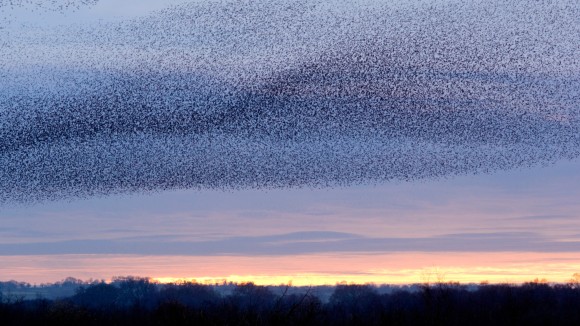
· Swarm Structure Simulation
After reading the book The Rules of the Flock I got inspired to test some ideas of the book. Basically a swarm behavior is defined when individual agents, following a simple set of local rules without a central leader, produce complex and intelligent collective patterns.
-
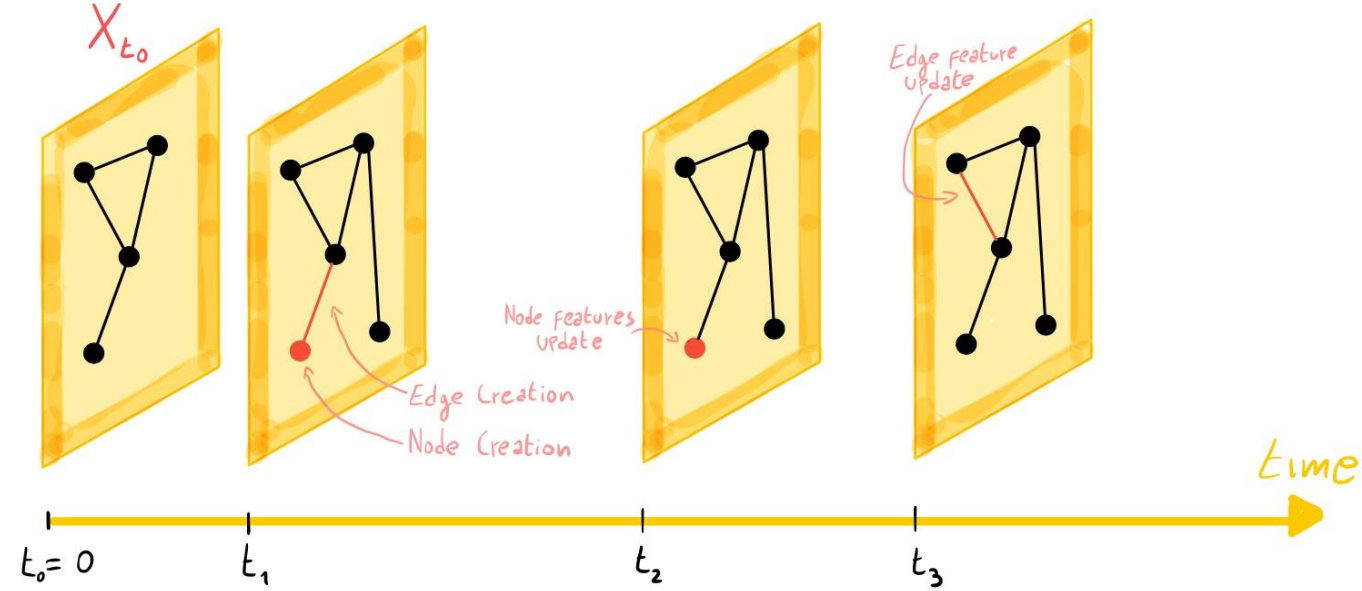
· Temporal Graph Networks: A Deep Dive into Dynamic Graph Learning
Real-world networks are rarely static. Social networks evolve as users form new connections, financial networks change with each transaction, and biological networks transform as proteins interact. Traditional Graph Neural Networks (GNNs) weren't designed for this dynamism. Enter Temporal Graph Networks (TGNs), a powerful framework for learning on dynamic graphs.
-
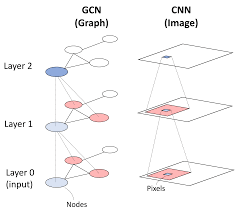
· Graph Convolutional Networks
Graph Convolutional Networks extend deep learning to graph-structured data by generalizing the convolution operation from regular grids (like images) to irregular graph domains. The key innovation lies in how they aggregate and transform feature information from a node's local neighborhood through spectral or spatial convolutions. In GCNs, each layer performs neighborhood feature aggregation where a node's representation is updated by combining its features with those of its adjacent nodes. This aggregation is typically followed by a non-linear transformation. The process can be mathematically represented as a function of the normalized adjacency matrix, feature matrix, and learned weight matrices. Here's the pseudocode for a basic GCN layer:
-
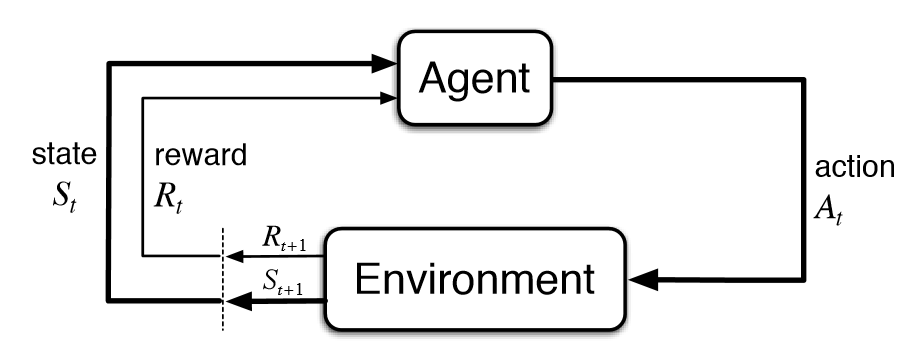
· Simple Reinforcement Learning Example
A simple RL example, where i want an agent to navigate a grid to reach a goal while avoiding holes. For more details here is the colab where I implemented the RL example Link to code