rl-rubiks-cube 2023
projects
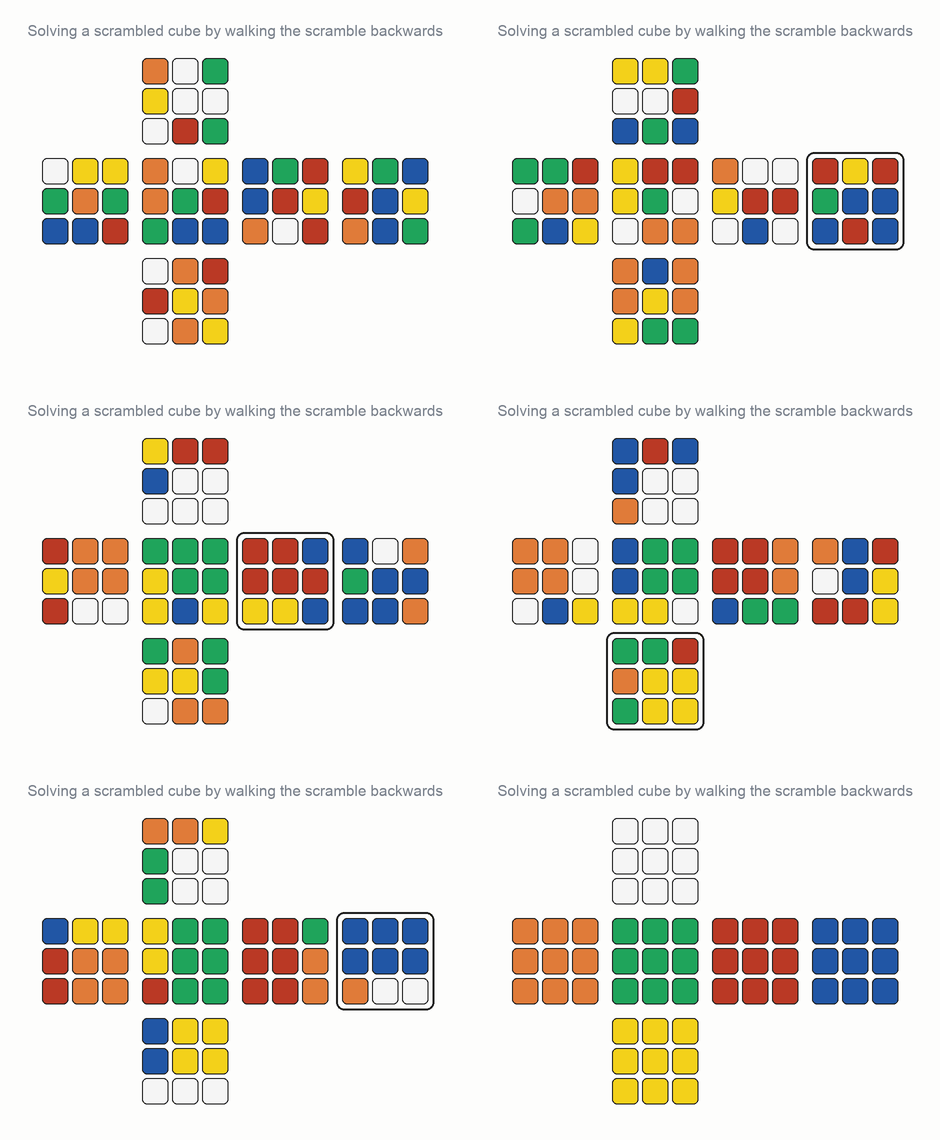
Solving the 3×3×3 Rubik’s Cube with no human knowledge and no solved-cube dataset — the agent learns purely by scrambling cubes and teaching itself to reverse the scrambles. A compact, readable implementation of Autodidactic Iteration (ADI), the method behind DeepCube (McAleer et al., 2018).
The challenge #
The cube has ~4.3 × 10¹⁹ states but only one goal, and the reward is only ever seen at that single solved state — so supervised learning has no labels and naive exploration almost never stumbles onto the reward. ADI sidesteps both.
How it works #
- State — 6 faces × 9 stickers, each one-hot encoded into a 324-dimensional vector.
- Actions — the 12 quarter-turn moves (each face clockwise and counter-clockwise).
- Self-generated data — there is no dataset. A solved cube is scrambled with a random sequence, then that sequence is walked backwards, recording every state together with its distance to solved. States nearer the goal are weighted more, so the value signal propagates outward from the solved state.
- Network — a shared feed-forward trunk feeding two heads: a value (how close a state is to solved) and a policy (which move makes progress).
- Training (ADI) — each state looks one move ahead at all 12 children and bootstraps its target from the best child’s value, iterating until the network converges.
- Solving — a beam search uses the policy to propose moves and the value to keep only the most promising states, walking a scrambled cube back to solved.